Corporate Bags Are Absolutely Cooked, No Cap
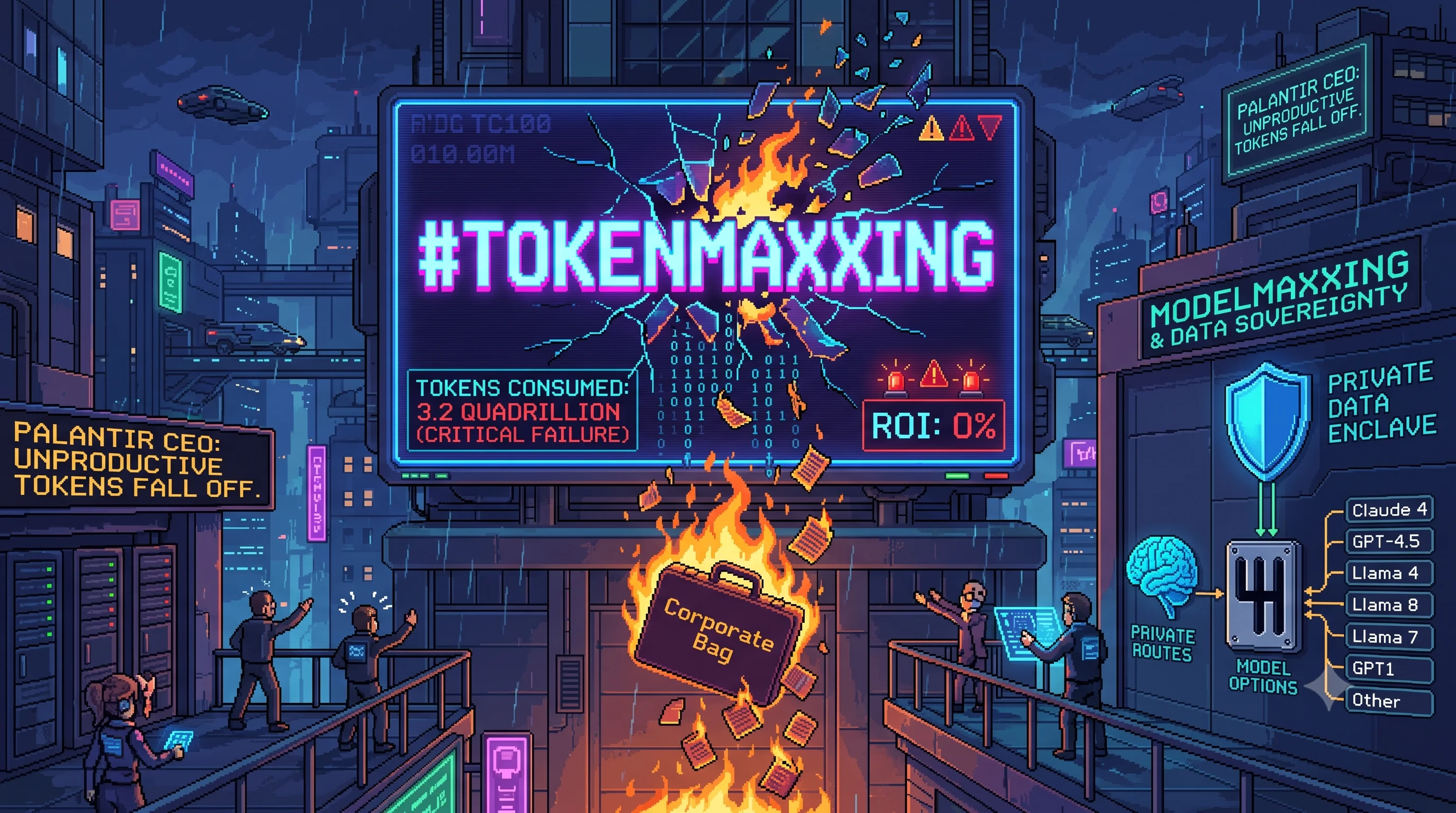
The great AI token bonfire of 2026 is burning out. Enterprises are waking up to massive bills, questionable ROI, and their precious alpha getting slurped by frontier labs. Time to pivot to Modelmaxxing and data sovereignty, fr.
The Hype Was Insane, The Reckoning Was Inevitable
Remember 2025? Everyone was tokenmaxxing like it was the new sigma grindset. Internal leaderboards tracking who could burn the most tokens on Claude Code, GPT wrappers, or whatever agentic slop was trending. Amazon telling employees to "toxenmaxx," companies bragging about AI adoption metrics. Sundar Pichai himself at Google I/O 2026 flexed that monthly usage hit 3.2 quadrillion tokens — a 7x jump in a year. Quadrillion. We really out here saying that unironically.
But in mid-2026, the vibes shifted hard. Corporate bags? Cooked. FinOps teams in full panic mode. The token economy revealed itself as a leaky abstraction, and now everyone's paying the piper.
Exhibit A: The Bloodbath in Enterprise AI Spend
- Uber: Torched its entire 2026 AI budget by April. 84% engineer adoption on Claude Code. Per-dev costs hitting $500–$2,000/month. COO basically admitted the customer value link was MIA. Fix? Hard caps at $1,500 per employee per tool per month.
- Microsoft: Revoked most Claude Code licenses company-wide after the bills went nuclear.
- Priceline & others: Renewal quotes coming in 4-5x higher. Token limits imposed after sharp spikes.
- Multiple Fortune-level firms reported 3x+ overruns, with one allegedly dropping $500M on Claude in a single month with no guardrails. Walmart limiting internal AI agents. The pattern is clear: this is not a bug, it's the business model.
Analysts are calling it an emerging "existential crisis" for AI budgets. Cheaper tokens didn't save money — they enabled more usage, especially in long-context agentic chains that chew through context windows like snacks.
Palantir CEO Alex Karp went full send in recent interviews:
"Every single enterprise... they're paying for tokens that create no value. These people are stealing the weights and alpha of my business."
He's not wrong. Companies are feeding proprietary datasets into black-box models, getting marginal outputs, and watching their competitive edge get distilled away. Karp's point hits different: if the value is real, why not outcome-based pricing instead of token roulette?
Related read: Palantir CEO on unproductive tokens
Meanwhile, OpenAI is reportedly considering drastic price cuts on tokens to fend off Anthropic in the looming pricing war. When even the labs are slashing, you know the tokenmaxxing meta is dying.
Modelmaxxing: The New Meta (Efficiency Over Volume)

Blindly 'maxxing' one model is out. Modelmaxxing — dynamically routing, comparing, and optimizing across multiple LLMs — is in. This isn't just toggling "Fast" in a web UI. It's treating the model zoo like a toolbox and picking the right implement for each job based on cost, latency, quality, and task type.
Core Strategies & Tools
1. Unified Interfaces for Easy Switching
- Poe.com: One app, dozens of models (Claude 4, GPT-4.5, Gemini 2.5, Llama 4 variants, etc.). Perfect for quick experimentation.
- OpenRouter: The goat for production. Hundreds of models, intelligent routing, provider fallbacks, and cost/speed optimization layers.
2. Smart Routers & Gateways (Code-Heavy Section)
Here's a basic OpenRouter routing example in Python:
import openai  # Works with OpenRouter endpoint
client = openai.OpenAI(
base_url="https://openrouter.ai/api/v1",
api_key="your_openrouter_key"
)
response = client.chat.completions.create(
model="openrouter/auto",  # Intelligent auto-routing
messages=[{"role": "user", "content": "Your prompt here"}],
extra_body={
"route": "fallback",  # or "fastest", "cheapest", etc.
"models": ["anthropic/claude-4-sonnet", "google/gemini-2.5-pro", "meta-llama/llama-4-maverick"]
}
)
print(response.choices[0].message.content)
PortkeyorLangChainagents with custom router chains.- GitHub repos like
LLMRouterandOrcaRouterfor benchmark/vote-based selection. - For multimodal:
Higgsfield.aifor image/video modelmaxxing (insane consistency and speed options).
Advanced setups use cost-latency-quality scoring:
def route_query(prompt: str, task_type: str = "general"):
    if "code" in task_type:
        return "anthropic/claude-4-sonnet"  # Strong reasoning
    elif len(prompt) > 50000:  # Long context
        return "google/gemini-2.5-pro"  # Big windows
    else:
        return "meta-llama/llama-4-maverick:free"  # Cheap & fast
This approach routinely delivers 25-60% cost savings while maintaining or improving quality as models converge.
What else ya got?!
Looking for something a bit more ‘entertaining’? Something to help you double clutch your tokens and stop granny shifting models like some no talent racer who never even had their car? Checkout this amazing Claude.ai Modelmaxxing stick shift!
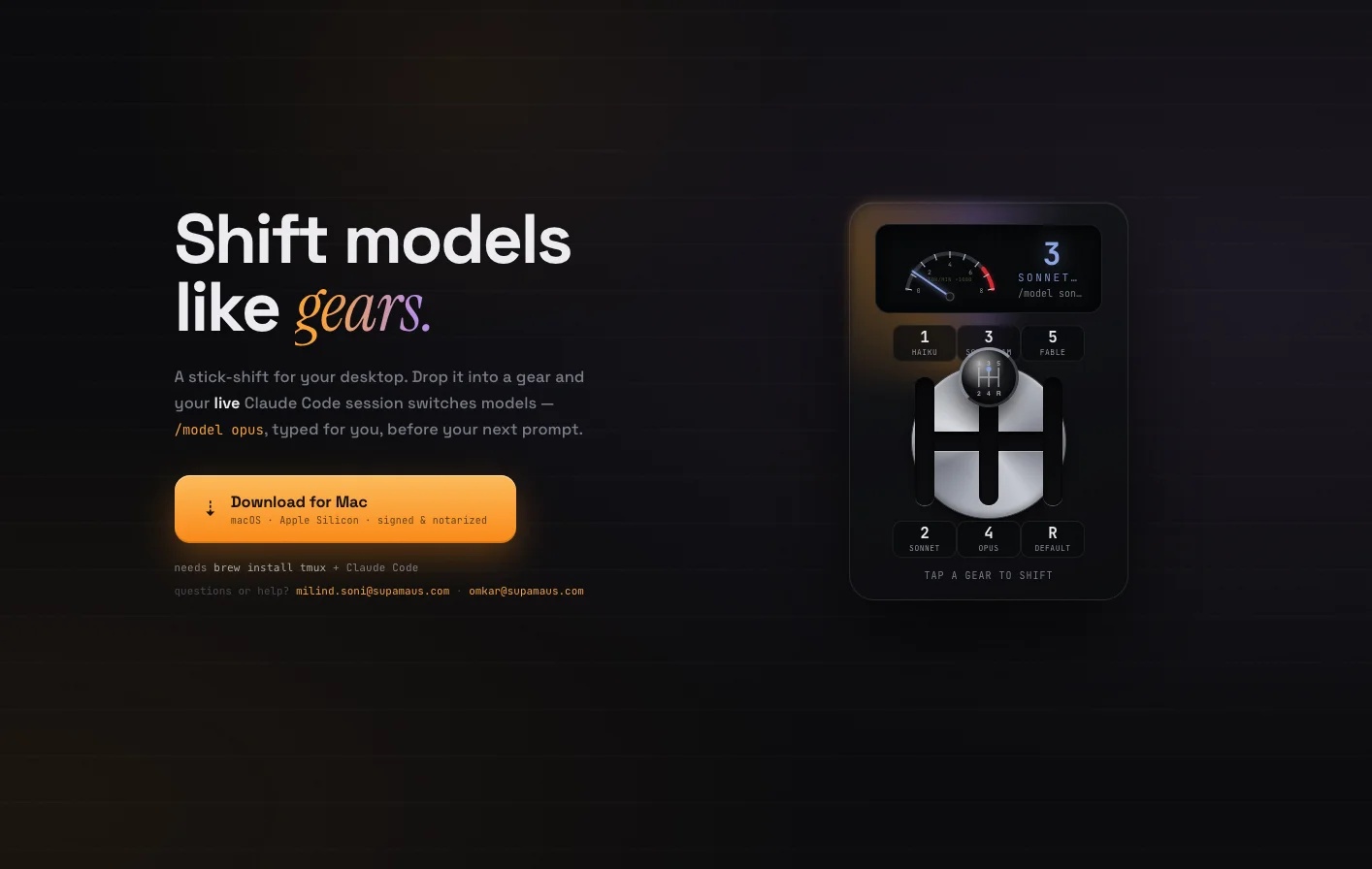
A stick-shift for your desktop. Drop it into a gear and your live Claude Code session switches models — /model opus, typed for you, before your next prompt.
The Future Takeaway: Proprietary Data = The Only Moat Left
As base models commoditize (thanks, open-source chads), the delta comes from your data. Company-specific processes, customer telemetry, internal wikis, historical decisions — that's the alpha.
But here's the data paradox: To make AI useful, you often need to feed it data. Feed it to public APIs and you risk leaking IP. The winners will:
- Run sovereign/on-prem setups (Palantir-style).
- Heavy RAG + fine-tuning on private data.
- Strict data governance layers before any token touches the wire.
- Hybrid routing: cheap public models for generic tasks, private for sensitive ones.
Keeping data siloed feels counterproductive short-term, but long-term it's table stakes. Models will keep improving incrementally. Your proprietary datasets compound. The rest of the stuff in this article is great information for today and tomorrow but I encourage you to seriously consider this notion going forward. As these models converge, if your running a business, or building apps, you are going to need to figure out what you have that others don’t, and guard it with your life.
Conclusion: Stop Tokenmaxxing, Start Thinking
Tokenmaxxing rizz officially fell off. The era of "just use more AI bro" is closing. Smart teams are now Modelmaxxing ruthlessly, implementing guardrails, and treating data as the new oil.
The companies that figure out efficient routing, outcome-focused spend, and data sovereignty will eat everyone else's lunch in the next cycle.
What are you doing in your org? Still raw-dogging one model or have you built a proper router? Drop thoughts below.
Links to go deeper:
- OpenRouter Models: https://openrouter.ai/models
- LiteLLM Docs: https://docs.litellm.ai/
- Sovereign AI discussions from Palantir
Stay based, keep grinding smarter — not just harder.
┏♫♪.ılılıll |̲̅̅●̲̅̅|̲̅̅=̲̅̅|̲̅̅●̲̅̅| llılılı.♫♪
┗┉┉❪⦗ jf ⦘❫┉


Comments
Add Comment
All Comments
// NO_COMMENTS_IN_BUFFER
Establish initialization protocol by creating the baseline entry trace.
System Moderation Interceptor is ON for this communication hub. All user transmission vectors must clear access protocol filtration approvals before broadcasting logs live to public network arrays.