Why the Rocket Ran Out of Fuel on Page One
Antigravity is Google’s new IDE with Gemini 3 baked in. It was supposed to allow developers to "vibe code" like never before, backed by the impressive tech stack Google DeepMind acquired.
When I first sat down to record, I expected this to be an easy puff piece. I was excited. But after clocking 20 hours of pure coding time—improving old projects, starting new ones, and seeing how far I could push it until it broke—my excitement evaporated.
There is a massive gap between what Google promised and what was actually shipped. Here is the full report on why Antigravity might be Google's biggest $2.4 billion letdown yet.
The Context: A $2.4 Billion "License"
To understand the disappointment, you have to look at the history.
Windsurf Preview
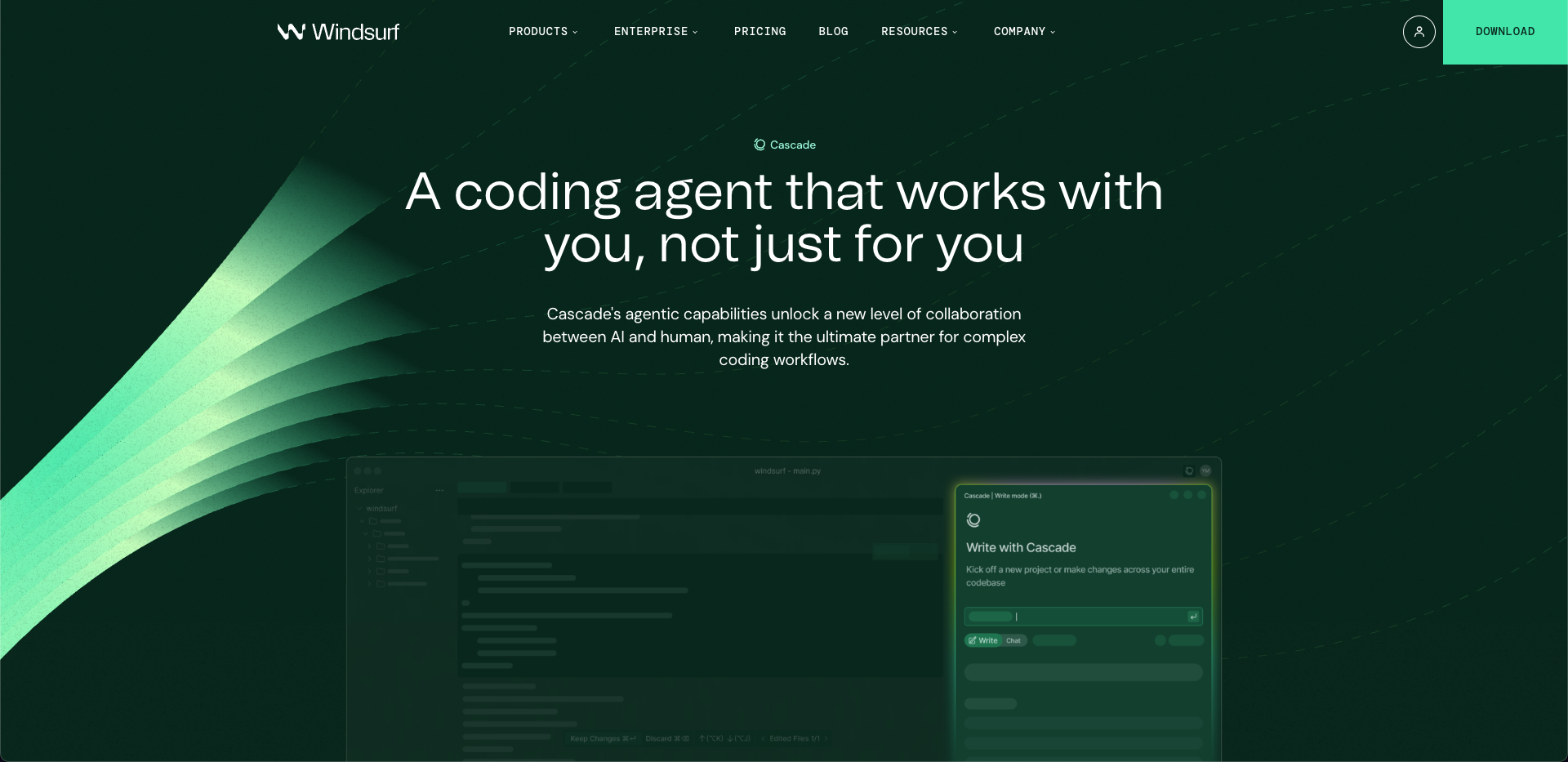
Back in July 2025, the tech world was watching a startup called Windsurf. They had an amazing AI-infused IDE that everyone was drooling over. OpenAI was sniffing around with a $3 billion offer, but the deal collapsed.
In the 11th hour, Google DeepMind swooped in. They dropped $2.4 billion—not to buy the company outright, but to "license" the tech and acqui-hire CEO Varun Mohan and the core R&D team. The goal? Inject real agentic-coding DNA into Gemini and launch the definitive AI IDE.
Fast forward to last week’s launch. Antigravity was supposed to be the "lift-off" moment. Sergey Brin even cameoed in the launch video. Expectations were stratospheric.
Spoiler alert: It barely cleared the launchpad before exploding.
The One Thing That Actually Matters: The Token Ceiling
I gave Antigravity a fair shake. I didn't just run "Hello World." I opened a fresh project and asked it to build a typical SaaS web app (Next.js + Prisma + Stripe + basic admin dashboard). You know, the normal stuff devs do every day.
- Page 1: “Create the project structure and landing page” → Fine.
- Page 2: “Add authentication with NextAuth and Prisma” → Starts replying…
- Mid-response: “Context window exceeded. Upgrade to Gemini 3 Pro (paid) for longer sessions.”
That’s it. One single page of real work and Gemini 3 Pro’s free tier is already choking. We’re talking ~30–40k tokens total before it forgets everything that happened five minutes ago.
For comparison, Cursor (running GPT-4o or Claude 3.5 Sonnet) routinely pushes 100k+ tokens in a single session without blinking. Real projects live in that territory. Suddenly, every fancy feature Google advertised—the browser agent, the parallel tool calls, the “agent manager”—becomes theoretical, because the model literally can’t remember the codebase long enough to use them meaningfully.
Video Evidence
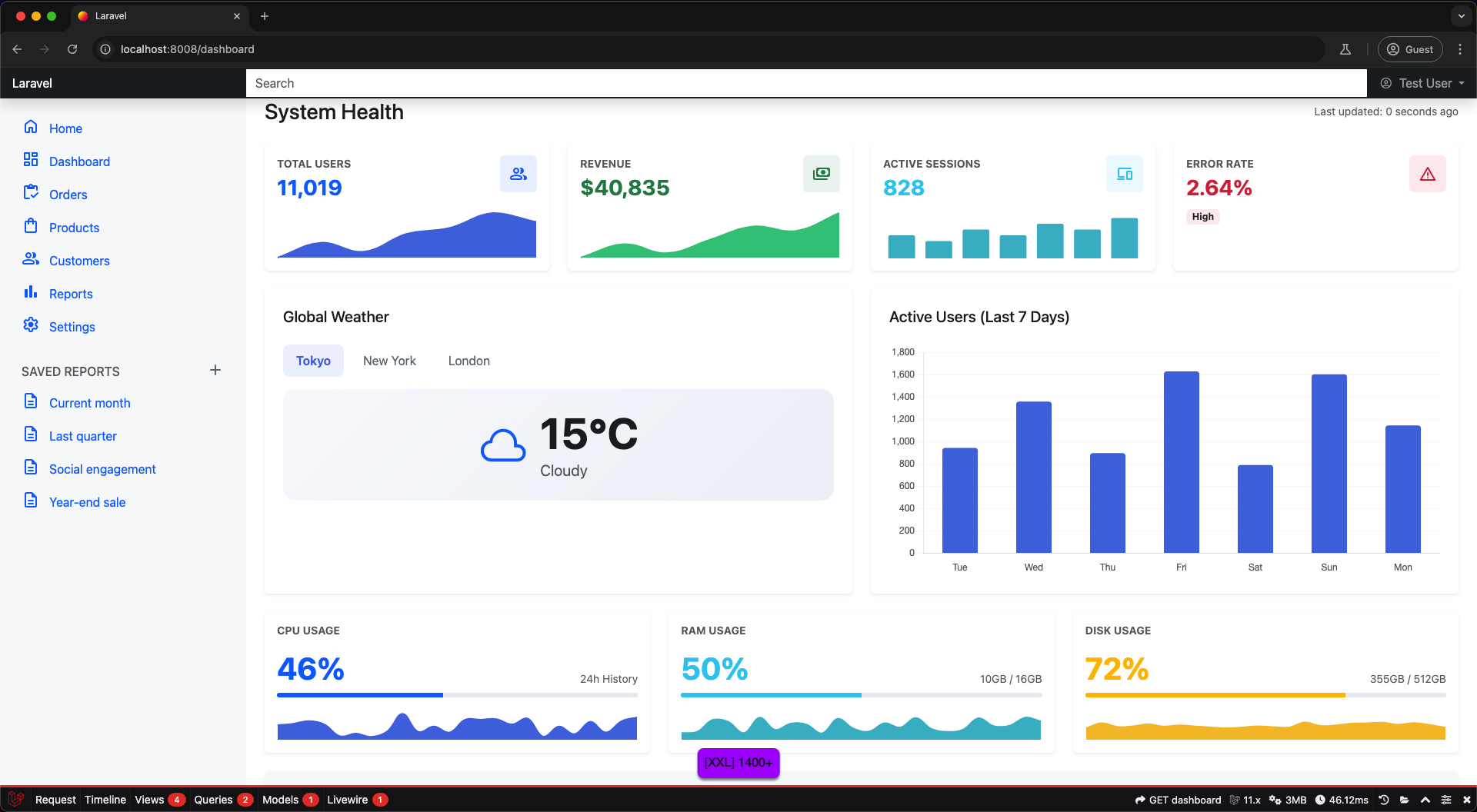
If you checkout the YouTube video I made about the relase of this IDE, you can see first hand exactly how little I was able to accomplish before hitting the token limit. I basically got a few cards built on a dashboard. Simple, basic HTML. as easy as coding gets, and I barely got 1 page mocked up before I was asked to pay up.
I used Cursor.ai for over a month before I ever hit a limit. Their free tier is incredibly generous. Compared to Antigravity, they are worlds apart.
The Myth of "Parallel" Agents
Antigravity talks the agent-first talk. It technically supports multiple agents—you can spin up parallel tracks for frontend, backend, and testing. It looks cool on a stream.
But here is the issue: When your context budget is gone after one dashboard screen, “parallel” doesn’t help—everything dies at the same time.
In Cursor 2.0, explicit parallel agents are isolated in separate worktrees. You can offload tasks: one agent patches your CSS while another stress-tests your API. You keep momentum.
In Antigravity, that flow breaks. You feel the bottleneck. It’s like mobile development all over again—hit build, stare at the screen, and pray the spinner ends before your enthusiasm dies. Without massive context memory, Antigravity treats agents less like coworkers and more like a single, slow intern.
The Hands-On Test: Building with Laravel Livewire
To be fair to the software, I wanted to see what the code generation quality was like inside that limited context window. I attempted to create a dynamic Server Health Monitoring dashboard using Laravel Livewire and Bootstrap 5.
The Good
- The Agent Pane: Visually, it’s very clean—a nice VS Code fork with better chat placement than Cursor.
- Initial Scaffold: I asked for a component with mock data for CPU/RAM usage updating every 2 seconds. Gemini 3 Pro scaffolded the Blade files correctly and remembered to include Livewire scripts (a common failure point for other AIs).
- Logic Generation: For single-file logic, the context window holds up. It wrote conditional PHP logic for the CSS classes perfectly in one shot.
The Bad
- Hallucinations: It tried to use a Bootstrap utility class that doesn't exist in Version 5.
- The "Wait" Time: I had to babysit the imports. I’m not seeing the "multi-threading" here—I have to wait for it to finish the PHP logic before I can ask it to tweak the HTML.
Did it build it? Yes. Did it feel effortless? No.
The Community Nightmare: Safety Risks
I am not the only one unimpressed. The developer community is tearing it apart, and for good reason. It’s not just buggy; it’s potentially dangerous.
- Antigravity is the first IDE that tried to hack my computer
- Antigravity just deleted the entire codebase without asking
One user on the AI_Agents board pointed out a massive safety risk: "An IDE generating chmod 777 without a prompt is not ‘helpful’... it is unsafe."
The Internal Embarrassment: Google Bans Its Own Tool
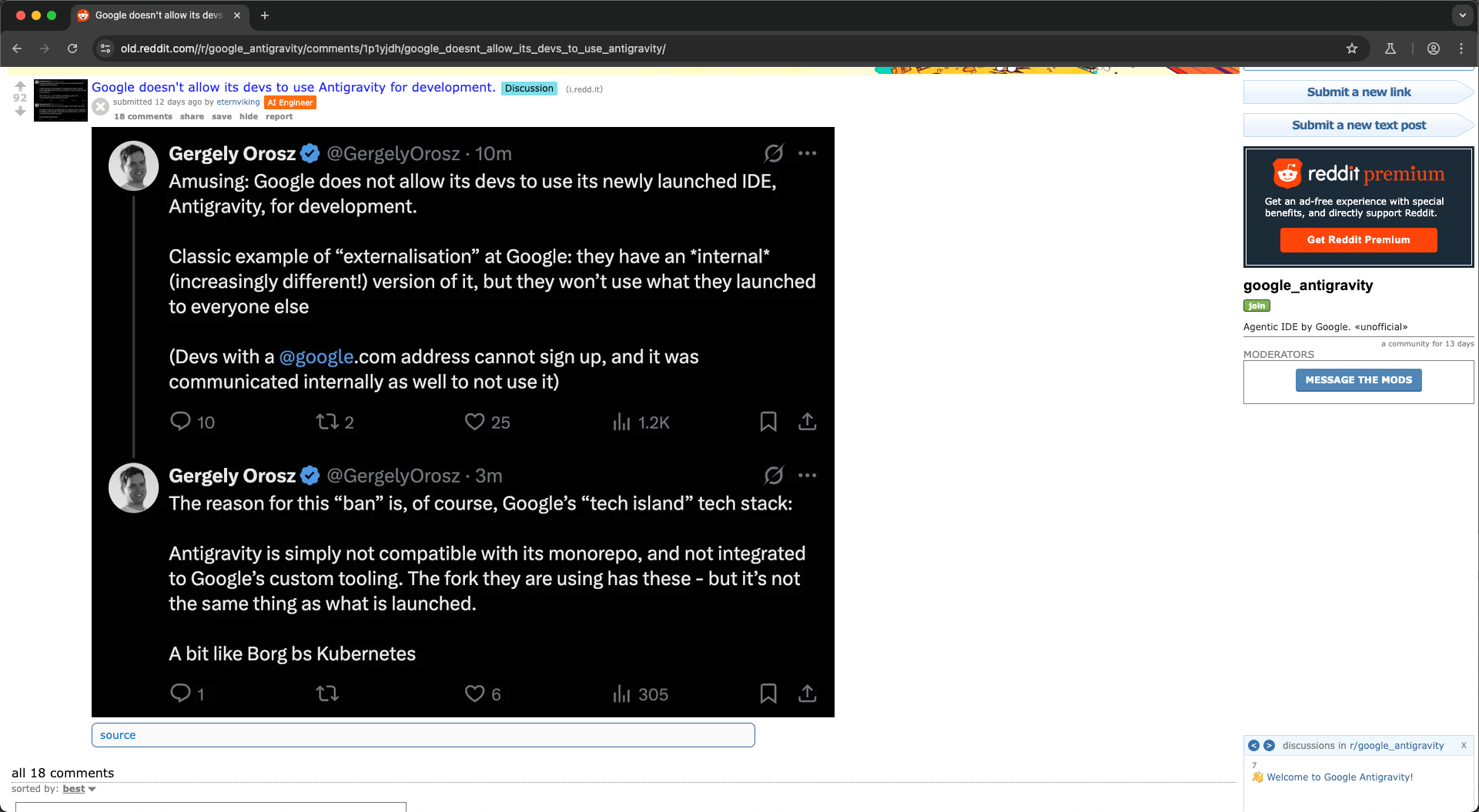
Here is the absolute kicker. Multiple sources on TeamBlind and Reddit have confirmed that Antigravity is blocked by Google's own internal policy.
“Leadership memo last week: Antigravity not approved for any Google repo. Stick to internal VS Code forks.”
“Asked if we could dogfood it on a 20% project → instant no, ‘IP leakage risk.’ $2.4B later and we can’t use our own tool. Painful.”
Think about that. They spent $2.4 billion on this team, released the product to us, and then told their own 180,000 engineers, "Don't touch that." Meanwhile, Shopify, Replit, and half of Meta have Cursor rolled out fleet-wide. The irony writes itself.
3 Theories: Why Did Google Do This?
Theory 1: The Calculated Beta (Harvesting Data)
Google's playbook is textbook "ship early, iterate often." Launch free and rough to undercut Cursor's $20–60/month subs, hook devs with Gemini 3's raw power, and flood their servers with real-world usage data. They are treating us as unpaid QA testers to train Gemini 4 on agentic workflows.
Theory 2: The "Founder Mode" Moonshot
This isn't just an IDE; it's Google's bid to redefine coding as "agent-first." Co-founder Sergey Brin himself popped up in the launch video—signaling high-stakes ambition. The internal ban is just standard Google risk-aversion while they experiment publicly. Long-term, this aims to be "Mission Control" for swarms of autonomous agents.
Theory 3: Corporate Bloat
The cynical take: Despite infinite resources, Google's matrix of fiefdoms and red tape diluted Windsurf's edge into a glorified VS Code fork. Security paranoia blocking internal use while external users eat the bugs is a symptom of AI lab bloat, not brilliance.
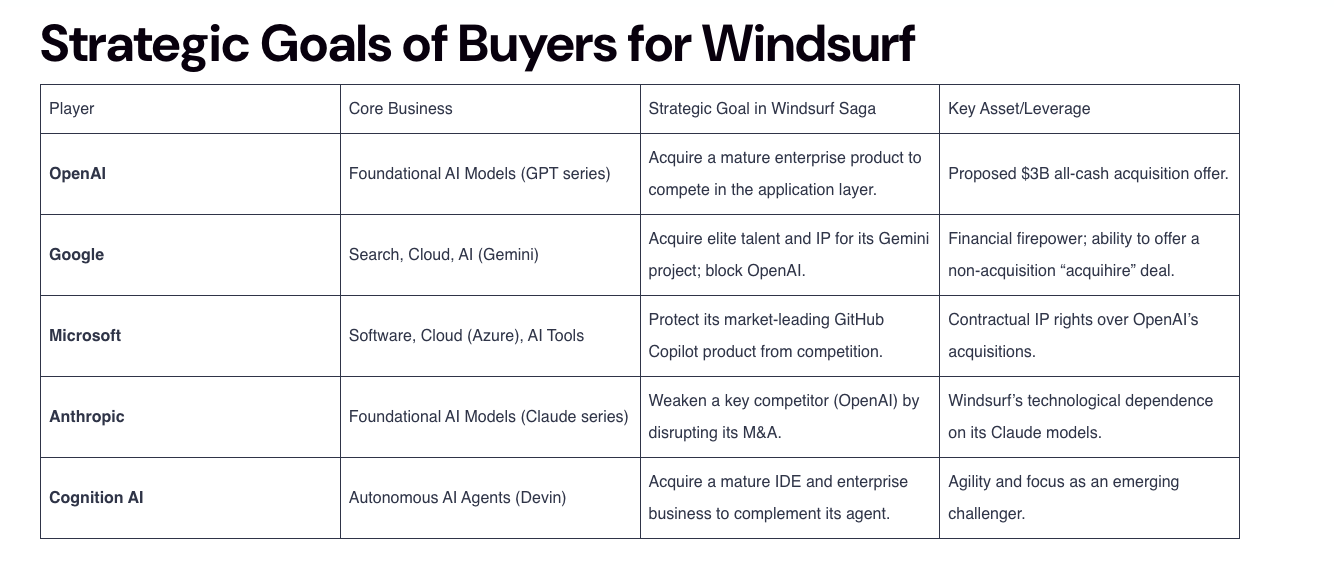
This graph was put out before the deal went through, and shows why each company was considering purchasing Windsurf. If you take this into account, another theory might be that Google simply wanted to prevent anyone else from having it. They already have Cursor eating their lunch in that department, they didn't need ANOTHER IDE competitor.
The Verdict
Antigravity isn’t broken in the “crashes constantly” sense. It’s broken in the far worse “fundamentally can’t hold a real codebase in its head” sense.
Until Google gives the free tier (or even the paid tier) a context window that isn’t stuck in 2024, everything else—multi-agent demos, slick UI, browser tools—is just PowerPoint.
I’m going to stick with Cursor. But I will keep Antigravity installed... mostly just to see if it ever actually reaches orbit.
Until then, Cursor still wins by the only metric that actually matters in 2025: it lets you finish the damn app.
Watch the Full Video Report
This article was based on the first-ever episode of Barebones Code! Please check it out here:


Comments
Add Comment
All Comments
// NO_COMMENTS_IN_BUFFER
Establish initialization protocol by creating the baseline entry trace.
System Moderation Interceptor is ON for this communication hub. All user transmission vectors must clear access protocol filtration approvals before broadcasting logs live to public network arrays.