A Staff Engineer’s 4-Step Evaluation Playbook
The Setup
Picture this: It’s Monday morning. You’re sipping your second coffee when your engineering manager walks up to your desk with pure main character energy...
"We're launching our flagship SaaS project next quarter," he says. "Everyone on X is raving about TanStack Start, but our stack is Next.js. I need a full report and your official recommendation on my desk by Friday."
In that moment, you have two choices. You can either give in to tech Twitter hype, pick whatever framework is getting glazed the hardest today, and pray it doesn't blow up production in six months. Or, you can step up with a systematic, repeatable framework evaluation strategy.
Obviously if you’re reading this, you know we are going with option B. So, lets get a definitive answer, Is TanStack Start actually ready to dethrone Next.js? To answer that, we need to look beyond surface-level hype and run a rock-solid tech evaluation playbook.
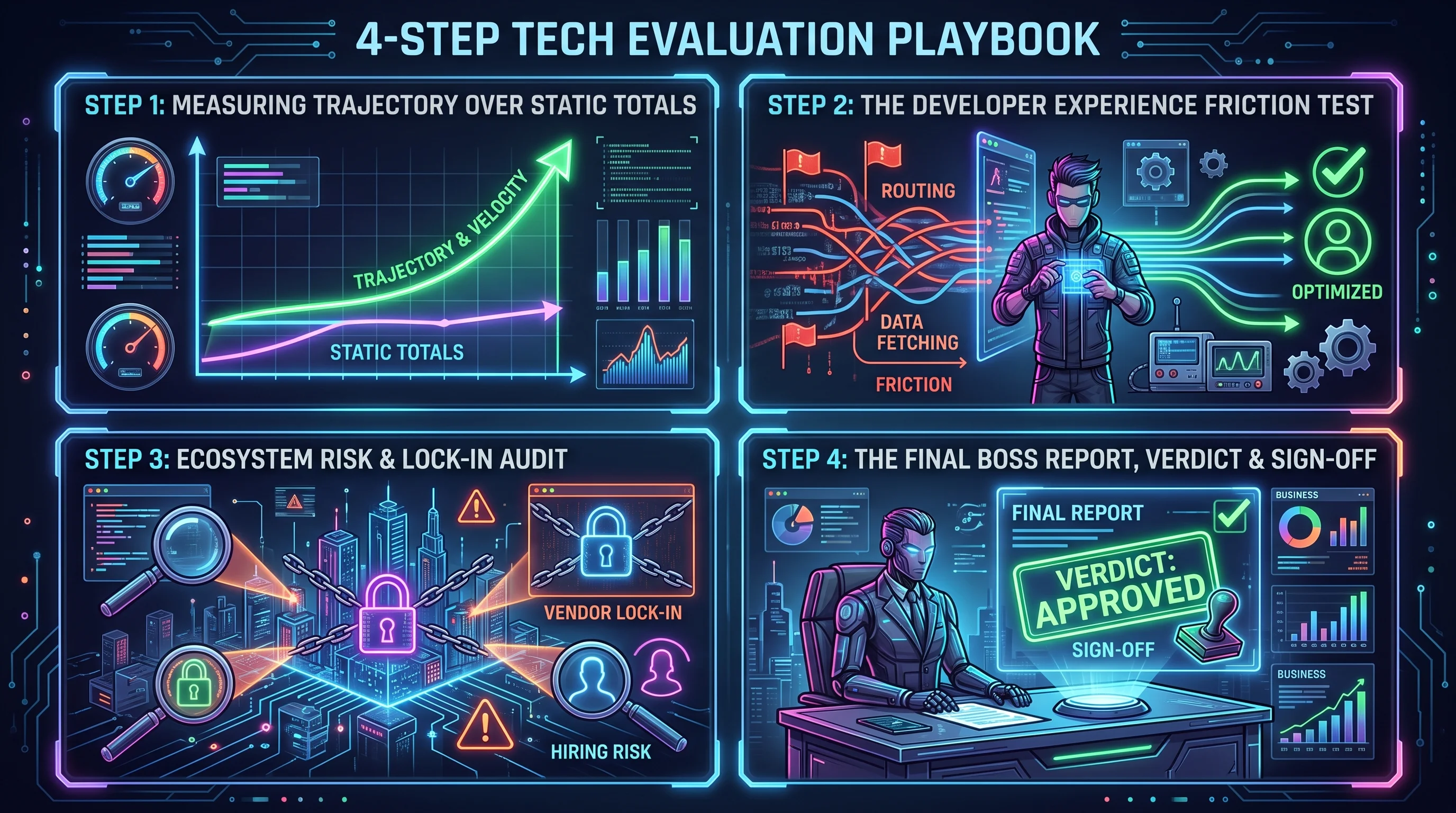
Step 1: Measure Trajectory Over Static Totals
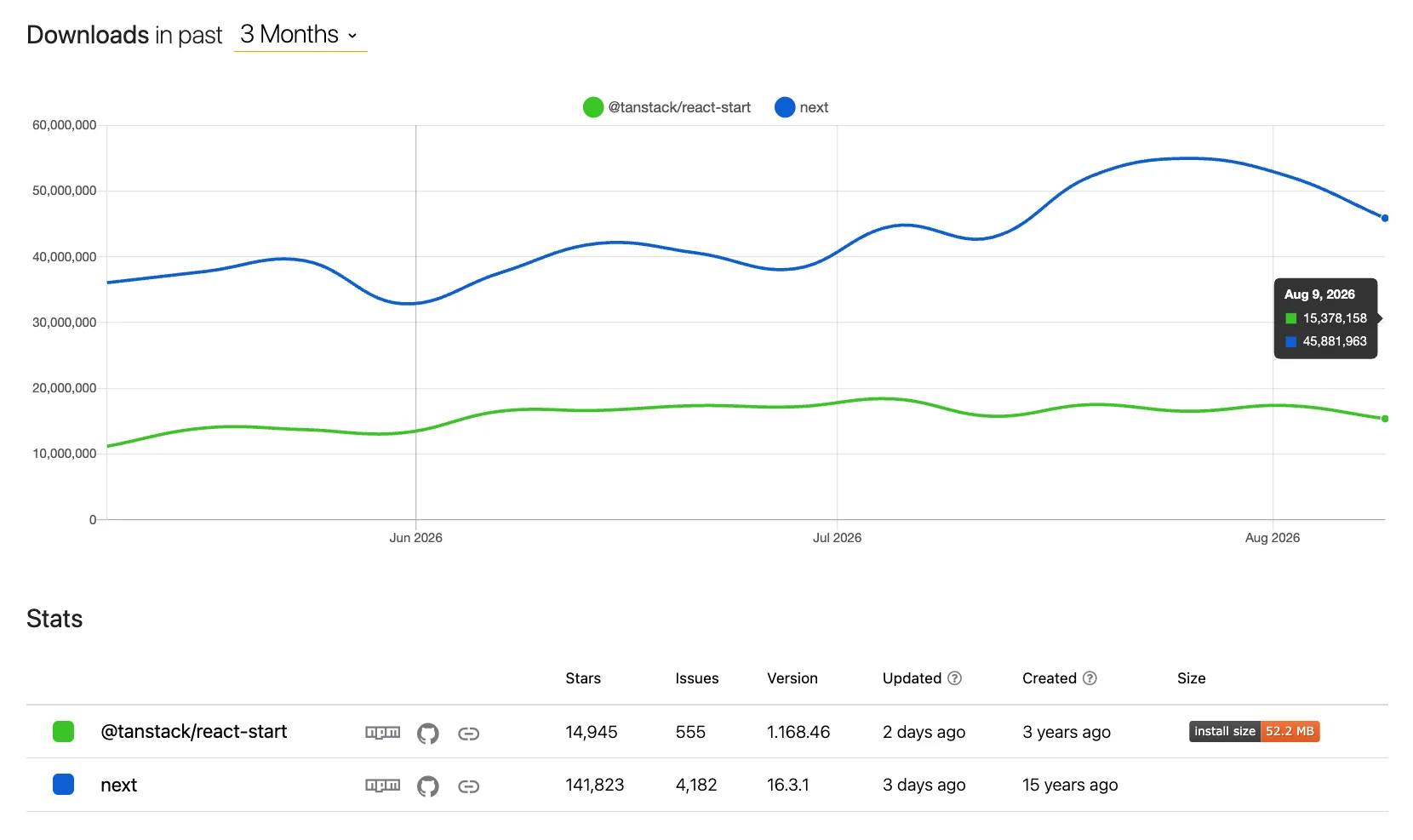
The most common mistake teams make when evaluating tech stacks is looking exclusively at total GitHub stars or total npm downloads.
Static totals heavily favor legacy packages that have been around for years. They don't tell you what engineers are actively building with today—they tell you what people were building with in 2021. To get an accurate picture of adoption momentum, track three velocity metrics instead:
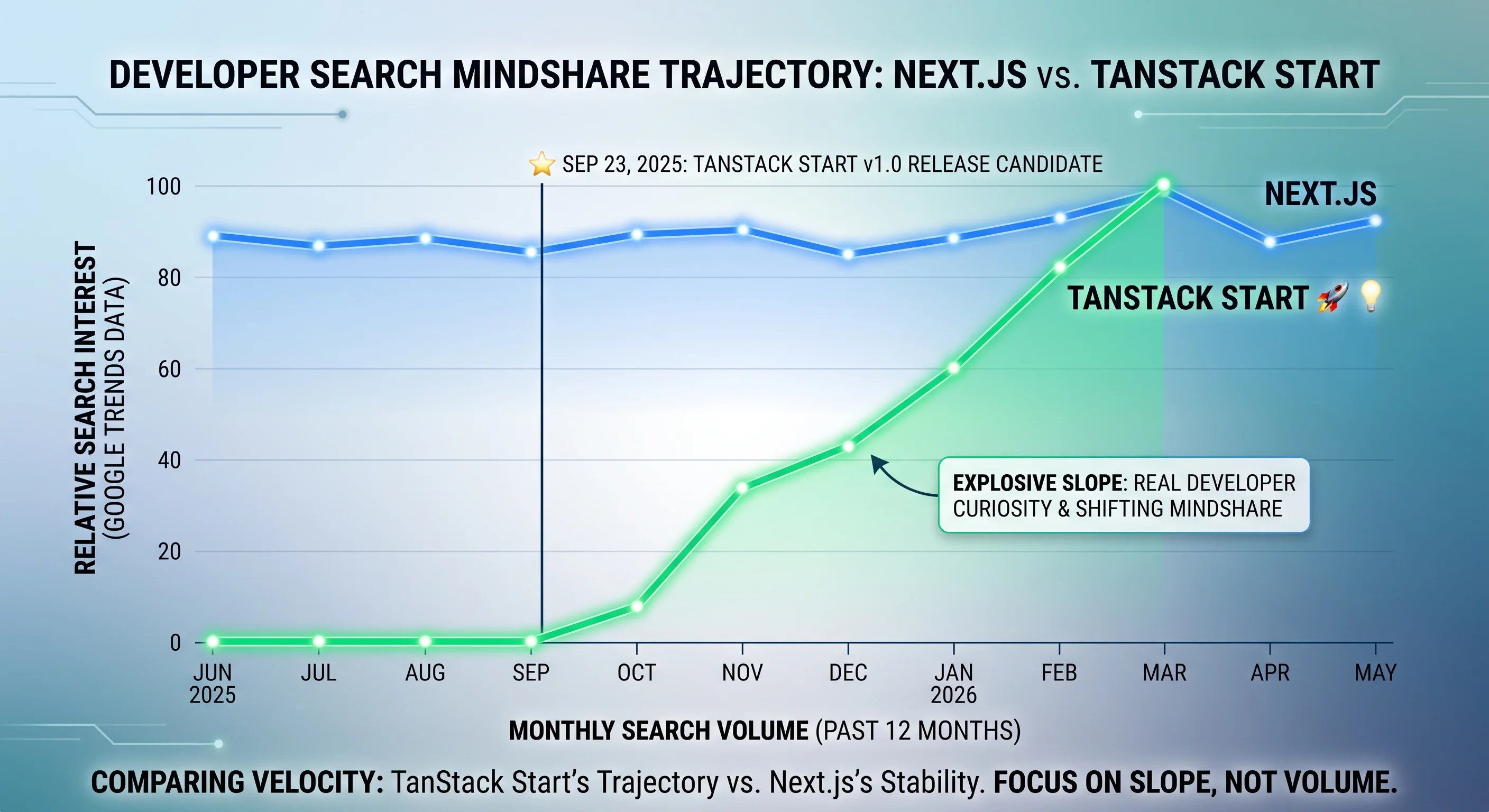
- Developer Search Mindshare Trajectory: Because raw GitHub stars are easily inflated or stagnant, evaluate relative Google Trends search interest over a 12-month window. Look at the slope of search trajectory following major releases.
- Month-over-Month (MoM) Download Acceleration: Raw npm download totals are noisy because automated CI/CD pipelines inflate them. Calculating the MoM percentage growth rate strips away pipeline noise and isolates genuine developer adoption momentum.
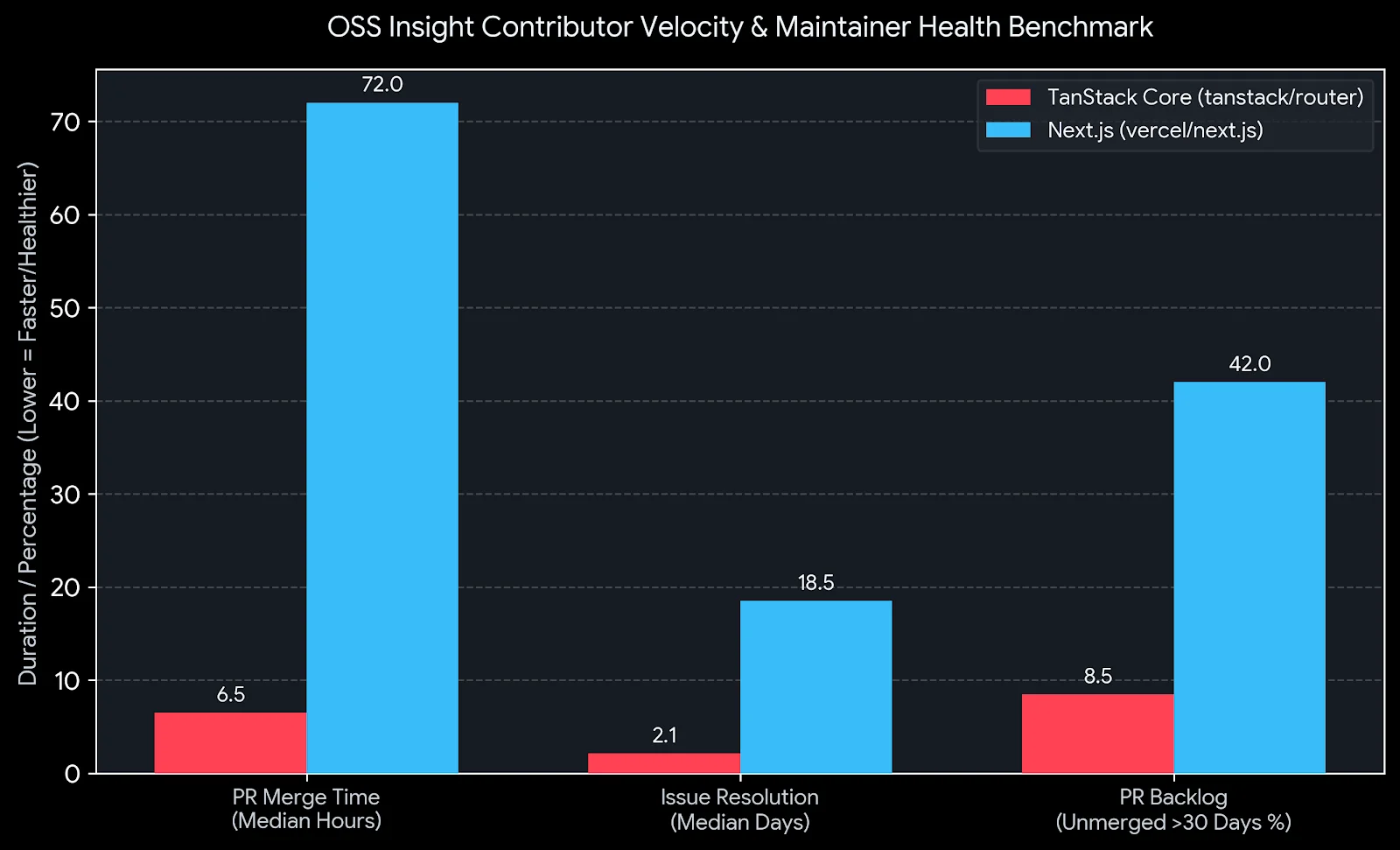
- Maintainer & Contributor Velocity: Use tools like OSS Insight to analyze PR merge speeds, issue resolution rates, and weekly commit density. High static star counts mean nothing if community pull requests sit unmerged for months while maintainers burn out.
██████╗ ██╗      █████╗ ██╗   ██╗██████╗  ██████╗  ██████╗ ██╗  ██╗
██╔══██╗██║     ██╔══██╗╚██╗ ██╔╝██╔══██╗██╔═══██╗██╔═══██╗██║ ██╔╝
██████╔╝██║     ███████║ ╚████╔╝ ██████╔╝██║   ██║██║   ██║█████╔╝
██╔═══╝ ██║     ██╔══██║  ╚██╔╝  ██╔══██╗██║   ██║██║   ██║██╔═██╗
██║     ███████╗██║  ██║   ██║   ██████╔╝╚██████╔╝╚██████╔╝██║  ██╗
╚═╝     ╚══════╝╚═╝  ╚═╝   ╚═╝   ╚═════╝  ╚═════╝  ╚═════╝ ╚═╝  ╚═╝
════════════════════════════════════════════════════════════════════
THE 4-STEP FRAMEWORK EVALUATION PLAYBOOK: NEXT.JS VS. TANSTACK START
════════════════════════════════════════════════════════════════════
To make deciding easier, I have prepared a helpful file: next_vs_tan/PLAYBOOK.md at main · huement/next_vs_tan This allows you to easily score each one and allow you to take the “guess work” out of the decision. The best part, this playbook works for comparing any two pieces of software, not just these two stacks.
📌 QUICK RESOURCE HUB
Here is a quick summary of the most important tools for making these kinds of decisions.
| Category | Primary Tool | Target URL | Objective |
|---|---|---|---|
| Mindshare | Google Trends | trends.google.com | Plot 12-month search velocity trajectory |
| Adoption | npmtrends | npmtrends.com | Isolate true MoM download acceleration |
| Health | OSS Insight | ossinsight.io | Audit PR merge velocity & issue turnaround |
WHY NOT GITHUB STARS ⭐️ ?!
For years, GitHub stargazer history was the go-to metric for tracking open-source adoption because tools like Star-History scraped the public /stargazers endpoint to plot real-time growth curves and measure adoption velocity over static totals. That changed when GitHub restricted access to the stargazers API and UI views, limiting historical timeline data strictly to repository admins and collaborators. According to the official GitHub Changelog announcement, GitHub made this restriction to curb aggressive automated scraping and prevent spam networks from harvesting user data from public star lists. Because third-party services can no longer reconstruct timeline charts for repositories they don't administer, historical star trajectory broke overnight—leaving raw stars as a static vanity metric rather than a reliable indicator of momentum.
RIP YOU CRAZY
DIAMONDSTAR.
STATS ANG GRAPHS
Step 2: Run the DevX Friction Test
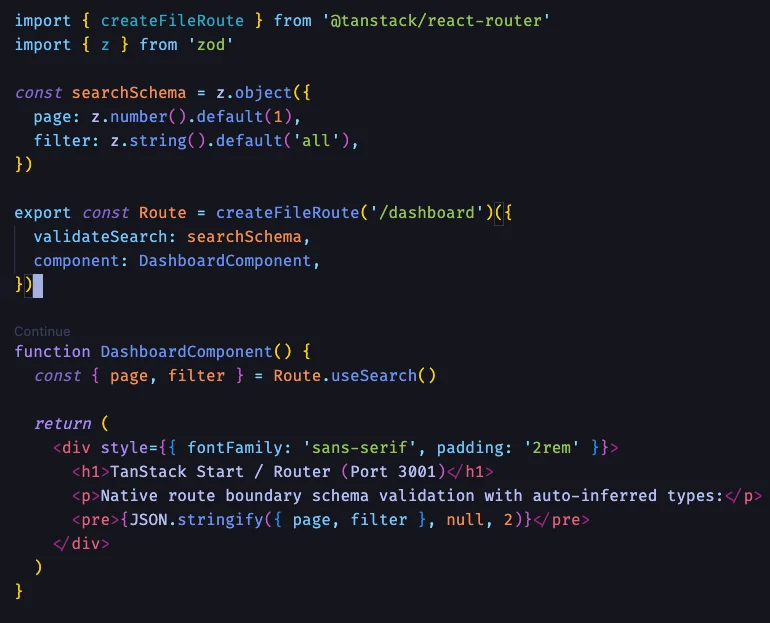
Don't waste weeks building an entire mock e-commerce store to test a new framework. Go straight for the two most error-prone pain points in modern web development: complex URL state/routing and full-stack type-safe data fetching.
+------------------------------------+------------------------------------+------------------------------------+
| Evaluation Vector                  | Next.js (App Router)               | TanStack Start                     |
+------------------------------------+------------------------------------+------------------------------------+
| URL Search Parameters              | Manual string parsing, casting,   | First-class Zod schema validation   |
|                                    | and defensive validation checks    | built directly into route schemas  |
+------------------------------------+------------------------------------+------------------------------------+
| Data Fetching Type Safety          | Requires custom API layers or      | Native server functions with       |
|                                    | client SDK generation              | end-to-end client autocomplete     |
+------------------------------------+------------------------------------+------------------------------------+
Complex URL State & Schema Validation
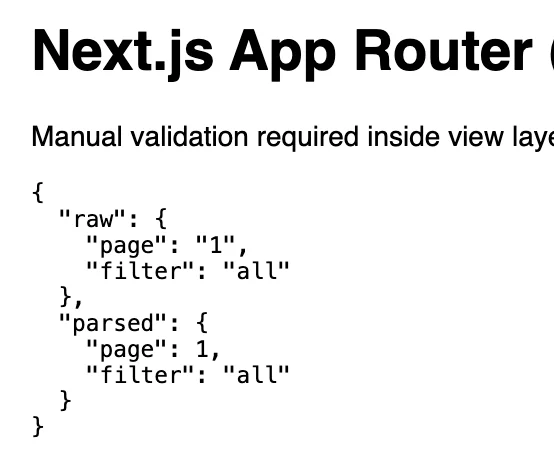
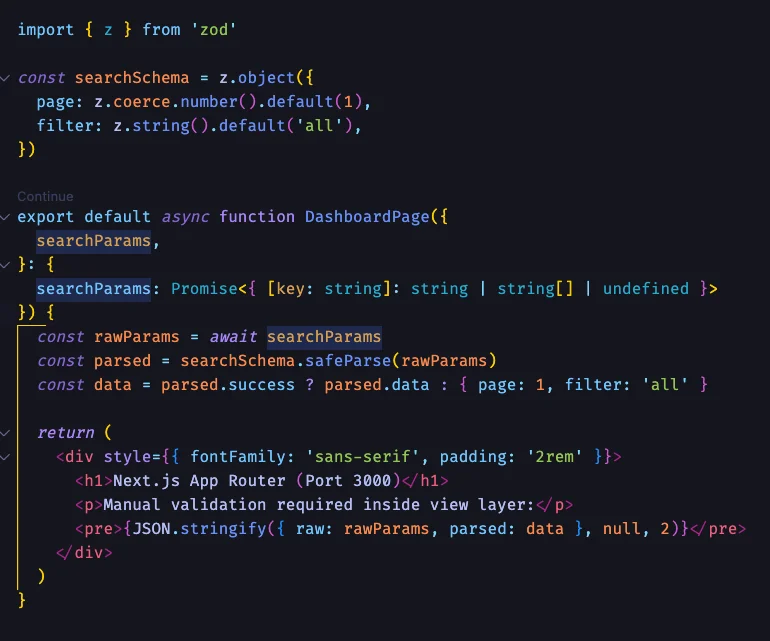
In the Next.js App Router, handling dynamic search parameters typically requires reading raw string values, manually casting types, and writing defensive validation boilerplate to guard against undefined runtime properties.
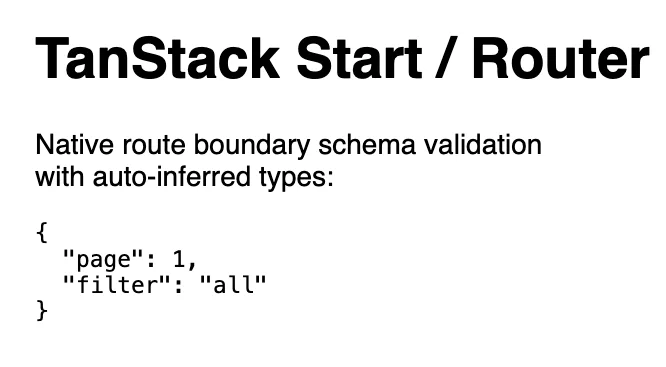
TanStack Start leverages TanStack Router, incorporating native, first-class Zod schema validation into the route definition. Invalid search parameters in the URL bar are caught and validated before the component even renders, providing end-to-end type safety and autocomplete automatically.
Full-Stack Data Fetching
When testing server functions in TanStack Start, type definitions flow directly from server code into UI components. You get instant IDE autocomplete without manually generating client SDKs or maintaining external build steps.
TESTBED REPOSITORY
There is a great (I made it) repository that has a testbed allowing you to pit both frameworks against each other doing URL routing, grabbing params, and other common problems you’ll face in virtually every web app. next_vs_tan/type-safety-demo at main · huement/next_vs_tan
NEXTJS
TANSTACK
Step 3: Audit Ecosystem Risk & Infrastructure Lock-in
Developer experience is only half the equation. A senior engineering evaluation must account for production infrastructure and long-term hiring realities.
Deployment Freedom vs. Platform Optimization
Next.js is an industry powerhouse, but its advanced caching layers and fine-grained revalidation are heavily optimized for Vercel's edge infrastructure. While self-hosting in custom Docker containers or standalone Node servers has improved, it introduces maintenance overhead.
TanStack Start is built on top of Nitro (the server engine behind Nuxt). It generates agnostic build targets for Cloudflare Workers, AWS Lambda, Node, Bun, or Vercel with minimal architectural friction.
The Hiring Pool Reality
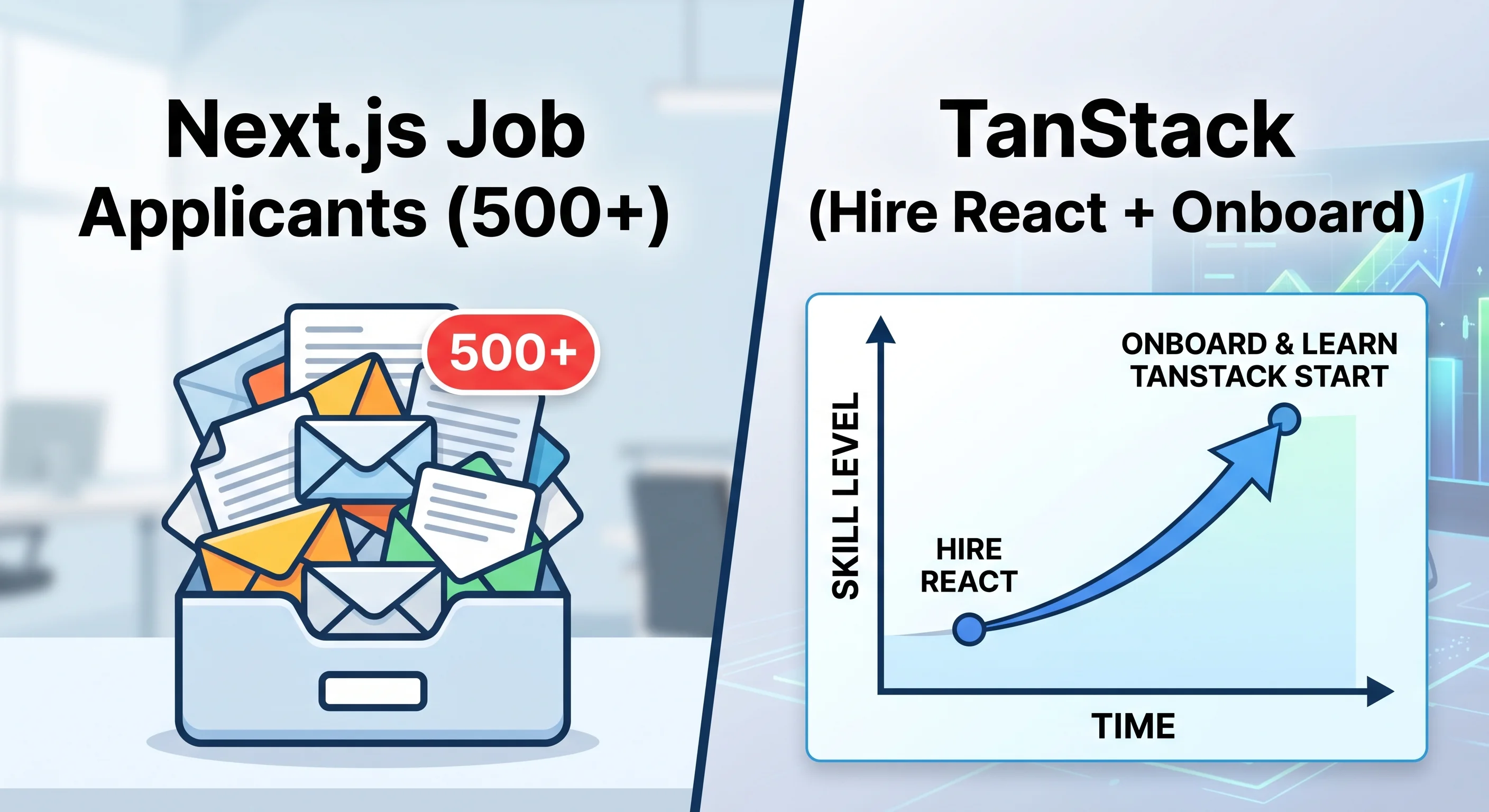
If you post a job listing for a Next.js engineer, you can expect hundreds of applicants quickly. Post a listing specifically requiring TanStack Start experience, and the talent pool narrows significantly. You will likely be hiring strong React generalists and onboarding them to the framework.
Step 4: The Framework Decision Matrix
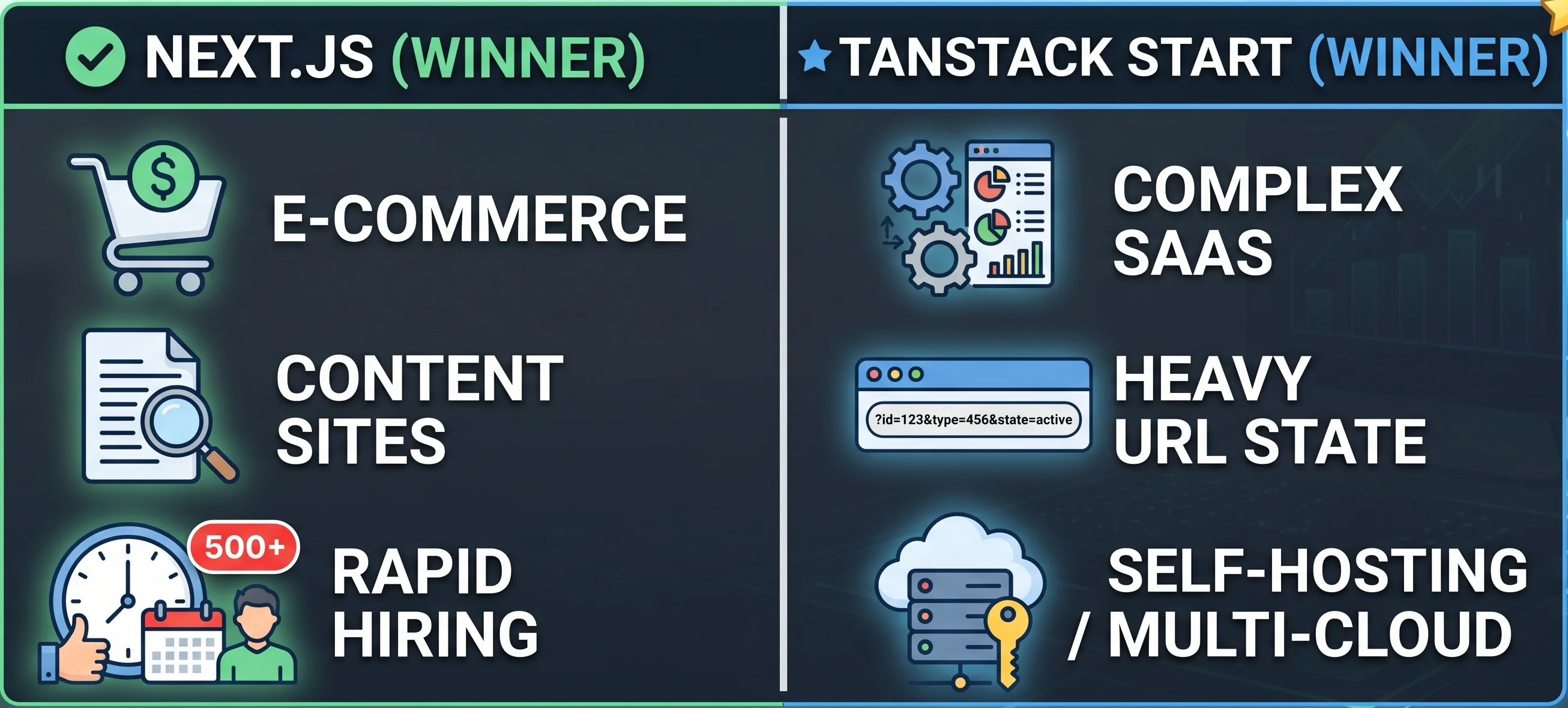
When Friday rolls around and you present your recommendation, align the technical details directly with core business requirements.
+-----------------------------------+-----------------------------------+
| Choose Next.js If:                | Choose TanStack Start If:         |
+-----------------------------------+-----------------------------------+
| • Public-facing e-commerce or     | • Complex SaaS applications or    |
|   content-heavy websites          |   data-dense dashboards           |
| • Need framework-managed caching  | • Heavy URL search param state    |
| • Immediate access to a massive   | • Strict multi-cloud or self-     |
|   specialized hiring pool         |   hosted deployment requirements  |
+-----------------------------------+-----------------------------------+
Evaluating technology like a staff engineer isn't about riding Twitter hype cycles. It's about tracking trajectory metrics, isolating developer friction, auditing infrastructure risks, and picking the right tool for your specific business goals.
Check out the full video breakdown for code walkthroughs and deep-dive metric analysis



Comments
Add Comment
All Comments
// NO_COMMENTS_IN_BUFFER
Establish initialization protocol by creating the baseline entry trace.
System Moderation Interceptor is ON for this communication hub. All user transmission vectors must clear access protocol filtration approvals before broadcasting logs live to public network arrays.