Adapt or Die in the AI Era
PHP2Shell
When news of the "PHP2Shell" zero-day broke, panic reverberated across the entire web ecosystem. Security operations centers lit up, emergency response teams were mobilized, and organizations worldwide were forced into immediate crisis mitigation. In a matter of hours, critical online infrastructure, major e-commerce platforms, and even entire government web portals temporarily shut down or went into lockdown mode to prevent unauthorized exploitation. With PHP powering the majority of the web, the potential blast radius was virtually unprecedented.
At its core, PHP2Shell is a complex out-of-memory memory-corruption attack vector. Researchers had originally identified precursor patterns of this vulnerability as far back as 2024, but traditional analysis and human-driven security audits failed to fully uncover or weaponize the trigger path. With the advent of advanced AI-assisted security research and automated exploit generation, the attack vector was finally unlocked and demonstrated against production runtimes. This milestone marks a shifting paradigm in cybersecurity and it is only the beginning of a new era where automated threat research rapidly shortens the window between vulnerability discovery and active exploitation.
Despite the severity of the threat, the response from the PHP community demonstrated remarkable resilience. Over recent years, PHP 8 has introduced substantial modernizations to the language, typing discipline, and core execution architecture. Building upon these modern foundations, the PHP Foundation and core maintainers responded with extraordinary speed, coordinating analysis and delivering the emergency PHP 8.5.12 security release in record time to shield global infrastructure.
The recent PHP zero-day (dubbed "php2shell") and the emergency release of PHP 8.5.12 serve as a major reminder for web developers and sysadmins. Relying solely on third-party host schedules to patch critical server runtimes can leave applications vulnerable to active exploits. Across different deployment models, whether using FrankenPHP, PHP-FPM, or legacy mod_php the vulnerability highlighted the need for modern, agile runtime management.
With automated scanning and AI-assisted vulnerability research accelerating, the gap between a vulnerability disclosure and active exploitation in the wild is rapidly shrinking. Having full control over your application's execution environment is no longer optional, it is a core security necessity.
Establishing a fast, repeatable deployment pipeline allows teams to patch runtimes in minutes rather than waiting days or weeks for platform updates.
The "Adapt or Die" Minimum Survival Requirements
To effectively mitigate high-frequency zero-day threats, modern PHP application stacks should satisfy four essential requirements. These are no longer nice-to-haves. If your setup cannot meet them, the next critical runtime flaw will leave you exposed far longer than the attackers need. The window between disclosure and active exploitation is measured in hours, not days. Teams that cannot push a patched PHP version through a CI pipeline and into production on the same day are operating on borrowed time.
If you are still on PHP 8.1 or earlier, you are already outside the support window. Official binary releases stop at 8.2. There is no complete upstream fix for those branches, and distribution backports are incomplete or delayed. The only durable path is an upgrade to a currently supported branch (8.2 or later) under a process you control. Waiting for a host or panel to "eventually" offer a package is no longer a viable strategy.
- Instant Version Switching: Change your PHP runtime by updating a single configuration tag or Dockerfile base image, rather than relying on manual server configuration. Learn more about Docker base image management.
- Decoupled Environments: Isolate your application environment from host operating system packages to prevent host-level dependency lock-in. Read more on explicitly declaring and isolating dependencies.
- Automated CI/CD: Deploy patches directly to production through automated testing and continuous integration pipelines. Explore CI/CD best practices.
- Local Parity: Maintain alignment between local development containers and production targets so patches can be verified safely before release. See guidelines on dev/prod parity.
Comparing PHP Execution Environments
Because vulnerabilities can affect different execution layers, choosing the right runtime architecture impacts both performance and patch speed. PHP can be loaded in several ways. The Server API (SAPI) determines how the interpreter is embedded, how request memory is managed, and how quickly a patched binary can be swapped in. The table below outlines common PHP application servers and runtimes:
| Server / SAPI | What It Is | Best Use Case | Patching Method |
|---|---|---|---|
| FrankenPHP | Modern Caddy-based application server written in Go with built-in HTTP/3 and worker mode. | High-performance modern APIs, microservices, and containerized apps. | Docker image tag update |
| PHP-FPM | FastCGI Process Manager; separates web servers (Nginx/Apache) from PHP worker pools. | Standard web applications, enterprise deployments, and containerized stacks. | Docker image update or package rebuild |
| mod_php | Legacy Apache module embedding the PHP interpreter inside Apache server processes. | Legacy monolithic hosts or simple traditional shared hosting environments. | Host OS package updates |
Structuring Your App: The Dev-to-Prod Pipeline
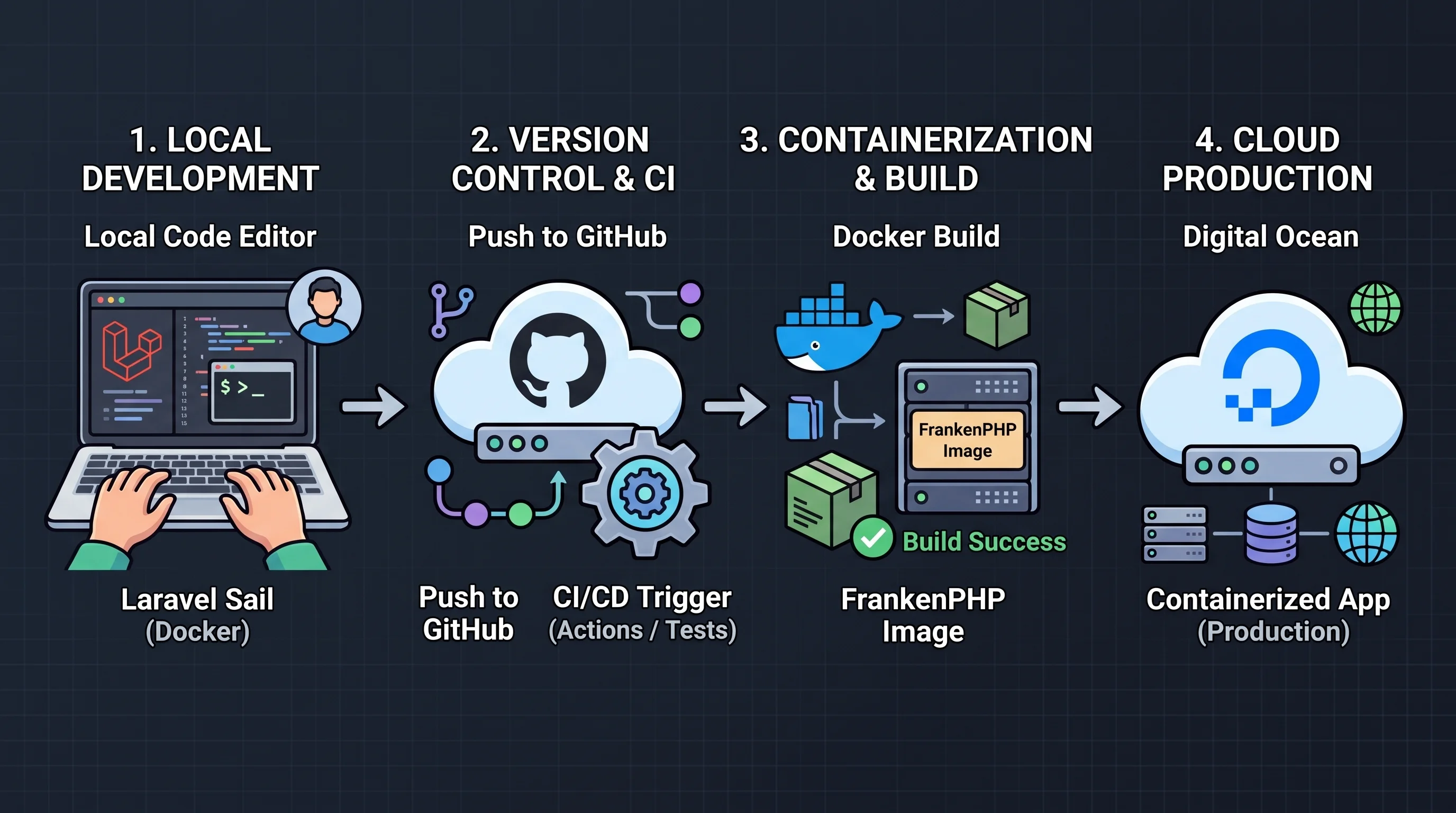
Modern frameworks have already solved the versioning problem. You just have to use the tools they provide.
Local Dev with Laravel Sail
If you are using Laravel, tools like Laravel Sail make local testing trivial. Sail uses Docker under the hood, meaning you can test the PHP 8.5.12 patch locally before it ever touches production. By adjusting your Sail configuration to build against the new version, you can run your test suite, verify the patch, and ensure your app hasn't broken.
Deploying via Containerized Pipelines
When deploying to cloud infrastructure or container platforms, separating the host OS from the runtime image is essential. In a containerized setup, your application runtime remains independent of the host node's operating system packages. Upgrading the underlying host OS does not modify the container image, and updating the container image does not disturb host infrastructure.
Whether running an all-in-one application server like FrankenPHP or a traditional PHP-FPM configuration behind Nginx, runtime floors can be enforced directly inside your Dockerfile:
For FrankenPHP
# Security floor: PHP 8.5.12. FrankenPHP 1.13.2 ships that patch.
FROM dunglas/frankenphp:1.13.2-php8.5.12-bookworm
Hard-fail the build if the image is compromised or outdated
RUN php -r 'if (PHP_VERSION_ID < 80512) { fwrite(STDERR, "PHP ".PHP_VERSION." is below 8.5.12\n"); exit(1); }'
For PHP-FPM
# Production App Runner
# Security floor: PHP 8.5.12 or newer.
FROM php:8.5.12-fpm-alpine
Alternatively, prebuilt hardened images such as Docker Hardened Images (DHI) are available alongside official patched base images (e.g., dhi.io/php:8.5.12-fpm).
Locking Down Composer
Application manifests should explicitly declare runtime dependencies. In your composer.json, require ”php": "^8.5.12". Furthermore, avoid bypass flags like —ignore-platform-reqs during production builds so that CI pipelines automatically intercept unpatched base images.
WordPress vs. Laravel: The Elephant in the Room
Modern web frameworks encourage containerized workflows by default, whereas content management platforms like WordPress often run on conventional host infrastructure.
Many WordPress sites remain tied to legacy control panels where PHP upgrades depend on upstream host schedules. If your host cannot provide prompt access to patched PHP versions, migrating to a platform or container setup that grants runtime control is vital. Shared hosting and traditional control panels frequently lag on critical runtime updates by days or weeks. That delay is no longer acceptable when unauthenticated remote code execution is possible before any application code runs.
WordPress can be run effectively using official Docker images managed via CI/CD automation. By containerizing WordPress deployments or utilizing managed hosting providers with instant patching SLAs, site owners maintain full authority over security rollouts.
Handling the Unexpected: Code Deprecations
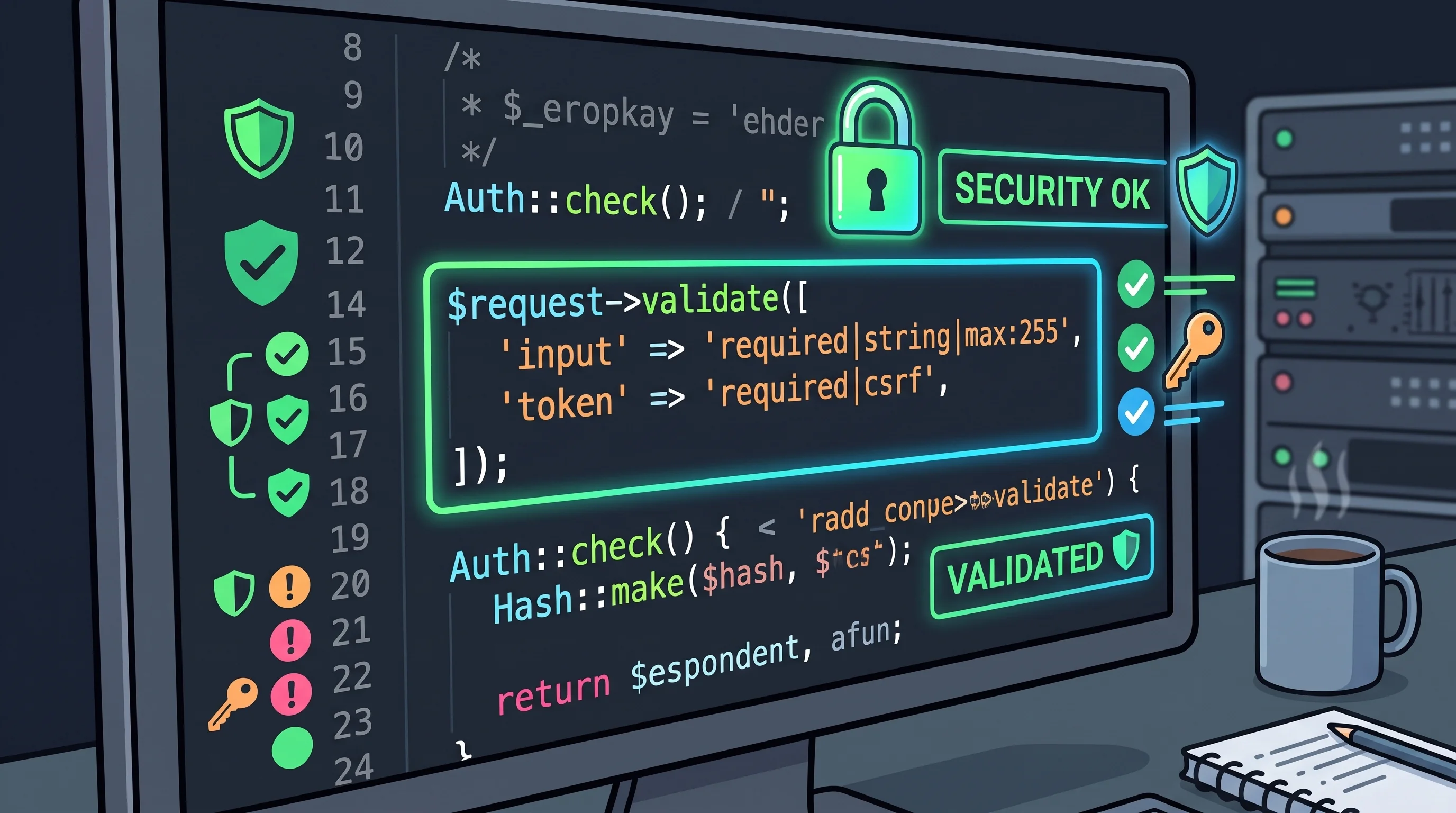
Upgrading runtime versions quickly can occasionally surface code deprecations. For instance, PHP 8.5 deprecated PDO::MYSQL_ATTR_SSL_CA. If unhandled, this can generate deprecation notices in output logs before standard exception handlers initialize.
The fix is a structural code update in config/database.php to use the new namespace:
use Pdo\\Mysql;
'options' => extension_loaded('pdo_mysql')

? array_filter([

Mysql::ATTR_SSL_CA => env('DB_SSL_CA'),

])

: [],
With an automated CI/CD pipeline, resolving deprecations is straightforward: update the code, trigger build verification, and let the deployment pipeline ship the patched container safely.
Upgrading Base Images and Hardening Runtimes
When a zero-day vulnerability like PHP2Shell surfaces, immediate remediation requires updating base runtime images across all supported release branches. Enterprise production environments often choose between standard official Docker images and Docker Hardened Images (DHI), which offer minimal attack surfaces by removing non-essential binaries and operational shells.
Comparing Official vs. Hardened Base Images
To protect against PHP2Shell and associated exploits, select the appropriate security floor image tag for your target release branch:
| PHP Branch | Official Docker Image Tag | Docker Hardened Image (DHI) Tag |
|---|---|---|
| 8.2.x | php:8.2.35-fpm-alpine | dhi.io/php:8.2.35-fpm |
| 8.3.x | php:8.3.36-fpm-alpine | dhi.io/php:8.3.36-fpm |
| 8.4.x | php:8.4.27-fpm-alpine | dhi.io/php:8.4.27-fpm |
| 8.5.x | php:8.5.12-fpm-alpine | dhi.io/php:8.5.12-fpm |
Rebuilding and Redeploying Containers
Once image declarations in your Dockerfile or Docker Compose files are updated, execute a fresh, uncached container build and force the active deployment to recreate running services:
# Force pull updated upstream layers and rebuild application containers
docker compose build --pull --no-cache
Pull pre-built service images directly if using a registry workflow
docker compose pull
Recreate containers immediately without service downtime
docker compose up -d --force-recreate
Verifying Running PHP Versions and Security Scans
Confirming the active runtime version depends on whether your image includes an interactive shell environment:
# For standard images with CLI shell binary access:
docker compose exec app php -v
For shell-less or distroless hardened images (DHI):
docker compose exec app php-fpm -v
To audit software bill of materials (SBOM) and verify mitigation against known PHP2Shell vulnerabilities (such as CVE-2026-109618 and CVE-2026-109619), run Docker Scout inspection commands against your deployed image:
# Inspect image software bill of materials (SBOM)
docker scout sbom dhi.io/php:8.5.12-fpm
Scan image for remaining active CVEs
docker scout cves dhi.io/php:8.5.12-fpm
Would a Hardened Image Have Contained PHP2Shell?
A common question during zero-day incidents is whether hardened or distroless images prevent underlying memory corruption exploits. While distroless architectures significantly restrict post-exploitation tactics, defense-in-depth remains essential:
| Security Dimension | Standard Base Images | Hardened / Shell-less Images (DHI) |
|---|---|---|
| Initial Vulnerability Trigger | Vulnerable to out-of-memory memory corruption in PHP runtime. | Vulnerable to out-of-memory memory corruption in PHP runtime. |
| Post-Exploitation Capabilities | Attackers can spawn interactive shell binaries (/bin/sh, /bin/bash). | Shell binaries are absent; spawning interactive shell processes fails. |
| Attacker Utility & Escalation | High; enables OS-level persistence, tool download, and lateral movement. | Low; restricts attacker activity primarily to in-memory payload execution. |
| Defense-in-Depth Measures | Requires runtime OS patching, read-only root FS, and process limits. | Minimal OS attack surface, immutable file system, no package manager. |
| While a shell-less container image prevents attackers from spawning reverse shells or executing system utilities, it does not stop the underlying memory-corruption bug from crashing or altering the execution flow of the PHP process itself. Therefore, hardened images reduce post-exploitation impact, but updating to a patched PHP runtime version remains mandatory. |
Pinning Base Images with Immutable SHA256 Digests
Relying solely on mutable image tags (e.g., 8.5.12-fpm) introduces risks if upstream tags are re-assigned or compromised. Immutable image digests guarantee that deployment builds use exact, tamper-proof container layers.
To retrieve the specific SHA256 manifest digest for a base image, inspect the multi-architecture manifest using Buildx:
# Inspect multi-architecture image manifest digest
docker buildx imagetools inspect dhi.io/php:8.5.12-fpm
After identifying the digest, declare the exact SHA256 hash inside your Dockerfile:
# Pin runtime base image using immutable SHA256 digest
FROM dhi.io/php:8.5.12-fpm@sha256:7f8e3b1c9a4d2e5f6a1b8c3d4e5f6a7b8c9d0e1f2a3b4c5d6e7f8a9b0c1d2e3f
The Bottom Line
Relying on static host environments for critical runtime patches is increasingly risky. Containerizing your stack, automating CI/CD builds, and maintaining full control over runtime dependencies are key steps to keeping web applications secure and resilient. By practicing what we preach and adhering to a modern container-first architecture, applying the critical PHP 8.5.12 update across our entire infrastructure was a seamless, quick, and stress-free process. By implementing the deployment patterns and architectural strategies outlined in this guide, your team can achieve the same level of agility and maintain an environment that is always ready to update at a moment's notice.
If your current setup cannot meet the four minimum requirements above, treat that as the highest-priority work item. The next zero-day will not wait for quarterly change windows or host provider schedules. Keep your PHP versions current, under your control, and deployable through automation. Anything less leaves the door open.
Recommended Tools & Resources
- Laravel Sail: Built-in Docker development environment for Laravel. (https://laravel.com/docs/sail)
- Docker: The absolute minimum requirement for immutable infrastructure. (https://www.docker.com)
- Dokploy: Open-source, self-hosted deployment platform (perfect for DigitalOcean VPS). (https://dokploy.com)
- FrankenPHP: The modern PHP app server written in Go. (https://frankenphp.dev)
- Composer: Dependency management for PHP. (https://getcomposer.org)


Comments
Add Comment
All Comments
// NO_COMMENTS_IN_BUFFER
Establish initialization protocol by creating the baseline entry trace.
System Moderation Interceptor is ON for this communication hub. All user transmission vectors must clear access protocol filtration approvals before broadcasting logs live to public network arrays.